The Articulation Economy
When making things becomes free, making your thinking legible becomes the work. And that work has a price.
“Efficiency is the boring part of AI.” Most organisations and most vendors frame the technology through an efficiency lens: automate the existing workflow, cut the headcount, save the cost. The numbers keep undercutting that story. An oft-cited figure has something like ninety percent of teams reporting no measurable effect from AI on the metrics that actually matter, and the people running large product teams tend to confirm it when you ask them privately. If efficiency were the whole game, the numbers would have moved by now. The more interesting question is what kinds of complexity we can now afford, rather than how to do the same work faster.
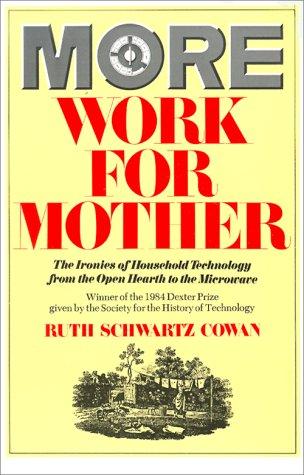
The dishwasher is the example I keep coming back to. It did not just clean dishes faster. It made the small-plate restaurant possible, a whole category of dining that needs far more dishes per meal and delivers a qualitatively different experience. Ruth Schwartz Cowan wrote a book about this pattern in 1983, More Work for Mother: the devices sold as labour-saving mostly raised the standard of what counted as acceptable, rather than giving anyone their afternoon back. AI is the same shape of technology. It makes previously unaffordable complexity feasible.
The measurement is not the work
There is a quieter consequence of making production this cheap, and it matters more than the efficiency story. For a very long time, valuable work was only valuable if it manifested in something that was valued. A great conversation left no trace unless someone recorded it as a podcast or wrote it up as an essay. The deliverable did double duty: it was the thing itself, and it was the measurable proxy for the parts of the work that resist measurement, the judgment, the reasoning, the relationships behind it.
Watch what happens in a university right now. A student hands in a competent term paper written with AI. It breaks nothing, except the one thing the paper was actually for. The institution is upset, and it is worth being precise about why. It is not upset because the student failed to learn. It is upset because the student stopped conforming to the system built to measure learning. The measurement system is not the same as the thing being measured. A student who wrote the paper in an afternoon with AI may well have spent the freed-up time learning what actually matters. What the institution captured was the artifact that satisfies the measurement, not the reasoning the artifact was supposed to stand for.
This is not a campus problem. It is how organisations mis-capture value everywhere. Take a policy team. Report-writing is what gets valued, because it is what gets tracked, scheduled, and written into the OKRs. The valuable work is the stakeholder relationships that the reports are nominally in service of. The honest way to put it to that team is: producing the report is necessary, but it is not the actual work. Automating the report does not remove the learning. It can even make the report better, because the machine enforces standards and pulls in context a time-pressed human skips. What it exposes is that the artifact and the value were never the same thing. The institution optimised the proxy for one simple reason: the proxy was the part it could measure.
Make the proxy nearly free to produce and you force the question of which was which. Wherever the artifact was mostly standing in for something harder to see, the value re-localises upstream, to that harder-to-see thing: the tacit method, made explicit. Where the artifact was the value in its own right, a cathedral, a proof, a novel, much less changes, and that difference is a useful diagnostic in itself.
This is the move sitting under most of my recent thinking, and I want to name it. As the cost of producing artifacts collapses toward zero, the centre of gravity of knowledge work shifts from making things to making thinking legible: to others, to machines, and to yourself. Call it the Articulation Economy. Legibility is its currency, and it is three things at once: the new product, the new trust mechanism, and the new scarce skill.
Legibility becomes three things at once
Legibility as the product. Valuable work no longer has to pre-commit to a medium. The same body of thinking can surface as a podcast, an essay, and something your agent answers questions from, all at once; the substrate stays amorphous and manifests differently for each person who meets it. The unit of professional identity moves from the polished artifact to the shape of your thinking over time, and what you curate to make visible, rather than what you produce, becomes the signal. I’ve written about this at more length as memory becoming a medium: the idea that memory, not content, not messages, not notes, becomes the central thing you publish. On the machine side, the question of what a queryable memory actually is has its own emerging landscape.
Legibility as trust. You cannot delegate what you cannot articulate. The architecture of a decision has to be visible for someone, or something, to act with you. The specific error people make is to delegate by describing outcomes, “reduce readmission rates”, rather than making the decision logic visible, “when a patient is discharged, check X against Y, and if Z then trigger a follow-up within forty-eight hours”. Handing work to a trusted new colleague and handing it to an AI turn out to require the same thing: explicit decision logic.
This is what makes AI a forcing function. Articulation was always available and almost always skipped, because a great deal of strategic thinking was never fully thought through in the first place. A machine will not act on what you have not made explicit, so it requires the articulation, and the articulation in turn requires the thought. You cannot delegate what you cannot articulate, and you cannot articulate what you have not thought through.
There is a simple test for whether you have articulated something well enough to hand it off. Can you state the decision in one sentence. Do you know where the information lives and who holds it now. What are the actual constraints, the rules rather than the feelings. What gets passed to whom, and what do they need in order to act without coming back to you. And how will you know it worked. If you can describe that clearly, you can delegate it, to a person or to a machine. If you cannot, the problem was never delegation. The strategy was simply never made explicit.
The second half of trust is that you cannot trust a system whose workings you cannot see. This is why people build their own, and why the noisiness of a legible tool becomes the environment in which trust forms. People resist being seen far more than they resist the technology. The image I keep reaching for is the Centre Pompidou in Paris, the museum whose pipes, ducts, and escalators are hung on the outside of the building. The architects did not expose the infrastructure as decoration. As Rogers’ architecture practice describes the intent, “the decision to place structure and services on the outside was driven by the need for internal flexibility”: you can only rearrange a space freely, and trust it, once its workings are on show. They meant the result as “a democratic place for all people.” Legibility without surveillance. I’ve made the fuller version of this argument as strategy becoming a protocol.

Legibility as the scarce skill. Picture knowledge work as a stack. Production sits at the bottom, and its cost has already fallen to nothing. Planning sits above it, the next six months laid out, and that is the layer the machine is climbing into now. What the climb leaves exposed at the top is the judgment register: the framing, the reasoning, the taste, the substantial question. That is the valuable work, and articulating it is the new craft. Upstream of the articulation sits something the German language has a single word for: Haltung, which means posture and attitude at once, the outward expression of an inward conviction. An explicit set of instructions to a machine is not neutral; it embodies a Haltung. Before anyone can write clear instructions, they need the mood, the information, and the space to form a position. This is why delegation so often stalls: the Haltung has not formed yet, so the articulation cannot follow.
And this is where the whole thing turns, because articulating your method is much harder than it sounds, for a reason most people never notice about themselves. There is an exercise from Gamestorming where you ask a group to write down how to make toast. Everyone can make toast. Almost no one can describe how they do it without discovering their instructions are full of holes, and that the person next to them, equally competent, does it in a different order for different reasons. Both are correct. Neither had ever looked. The same thing happens the first time someone tries to hand their real work to an agent: they reach for the decision logic and find they have never actually seen it.
So articulation is a crutch for a very introspective kind of work you have to do with yourself. You cannot tell an agent “this is how I do things” until you have become aware of your own patterns clearly enough to describe them. The scarce skill was never the writing of the protocol. It is the self-knowledge the writing demands, and demands first.
The premium has a price
Most accounts of AI-augmented work stop at the good news and ignore the bill. That self-awareness is not free. It costs sustained time, mental space, and attention that not everyone has. Call it the Introspection Tax: the cost of the self-articulation this whole shift demands, and the fact that it is unevenly affordable. The limiter is time, not talent. A single parent with two jobs cannot pay the same Introspection Tax as someone with slack in their week, however capable either of them is. This is what scarcity research calls the bandwidth tax: scarcity itself consumes the working memory and executive control that reflection would need (Mullainathan and Shafir), so the constraint bites capability sideways rather than head-on. It is a shortage of the resource, not of the person.
It is worth saying what this is not. The loudest worry about AI and thinking right now is cognitive debt: the idea, popularised by a much-shared MIT study, that offloading your thinking to a machine quietly erodes your capacity to think at all. You save the effort now and pay later, in atrophy. The Introspection Tax runs the other way. It is the cost of thinking more, and earlier: the self-knowledge you have to supply before you can delegate well at all. The metaphor is doing real work. A debt is deferred and it compounds; a tax is levied at the point of entry, and it can be regressive. Cognitive debt warns you what happens if you skip the work. The Introspection Tax is about who can afford to do it in the first place.
The tax has an economic engine underneath it worth stating plainly. AI drives the monetary cost of producing an artifact toward zero, but that cost does not disappear. It re-denominates. It comes back as a cognitive cost, the introspection and articulation you now have to supply, and it gets ratcheted upward by a rising standard of what counts as good work. You save dollars and you repay in attention.
That ratchet is the oldest pattern in the book, which is why More Work for Mother keeps coming back. The appliances did save labour. Cowan’s point was that they also raised the standard of what counted as done, and changed who was left to do it. The vacuum cleaner raised the expected standard of a clean home. The washing machine made it unacceptable to wear the same shirt twice. And as the shared household labour of servants, husbands, and children got automated away, the higher standard fell to one person to absorb alone. Every device that promised less work generated the adjacent new work to fill the room it had opened.
The dishwasher from the start of this essay is the same machine seen from its other side. It made the small-plate restaurant possible, and in the same motion it made a good dinner mean more dishes, more courses, more complexity. AI is that machine for thinking. It does not reduce the amount of thinking; it raises the standard of what counts as strategic thinking, and the Introspection Tax is the new, unpaid labour that standard quietly demands. Cowan’s sharper point travels too: the raised standard lands hardest on whoever has the least slack to absorb it. I’ve made this argument on its own as what kind of complexity we should afford ourselves.
This is what turns the Articulation Economy from an opportunity into a sorting mechanism. The premium is real, and it is unequally affordable, so it rewards the people with slack and leaves behind the people without it.
You cannot introspect your way out
Say you can afford the tax. There is still a sharper problem, and it cuts against the obvious remedy. The obvious move is to introspect harder, and the psychology on that is not encouraging. We are poor witnesses to our own reasons. Asked why we did something, we produce a confident story that often has little to do with what actually moved us. Looking inward more does not correct this, and past a point it curdles into rumination. Paying the Introspection Tax buys you an attempt at articulation. Whether the attempt is any good is a separate question, and the honest answer is that it varies.
That deepens the inequality rather than softening it. Accurate self-knowledge tends to arrive from outside: from someone with the distance to reflect you back honestly, a coach, a peer who tells you the truth, an institution built for it. That is one more thing the people with slack and standing already have more of. The ones with the least time to look inward are also the ones with the least access to the help that would make looking inward pay off. The tax compounds.
There is a direction worth naming, though it is a bet more than a fix. Rather than ask people to introspect harder, you hand them their own patterns back from the outside. Over the last month you reasoned in these three ways. Is that who you want to be. That moves the work from excavating yourself by willpower to recognising yourself in evidence. It does not settle anything, because the same gap reappears one level down. The people who would gain most from having their patterns handed back are the least likely to be anywhere that does it.
The attention it is paid in
What emptied that slack in the first place? For twenty years the Attention Economy has run the opposite trade. Where the Introspection Tax asks you to turn attention inward, onto your own method, the Attention Economy exists to pull it outward, to capture it, fragment it, and sell it. Same scarce resource, opposite direction, so the two compete: every hour a feed harvests is an hour you cannot spend on yourself. And the harvest was never even. It fell heaviest on the people with the least protection from it, the precarious, the doom-scrolled, the gig-timed. So the Introspection Tax is not regressive by accident. It is regressive because the attention it is paid in was already taken, and taken hardest from those who could least spare it.
It is tempting to cast the Articulation Economy as the successor, the market that finally supersedes the Attention Economy. It is closer to the truth that the Attention Economy feeds on what the Articulation Economy needs. The predator is the older market. Which makes reclaiming your own attention the first cost of entry, the price you pay before you can even begin to pay the Introspection Tax, and least payable by the people the feed already holds tightest.
What’s left, and who can afford it
Put the stack back together. Production went first, and its cost is gone. Planning is following it now, into machines that lay out the plan faster and more evenly than a person can. What that leaves is the layer above planning, and the only door into it is the tax.
The pressure shows up first in the gap between strategy and planning. When executives say they want strategy, most of the time they mean planning: the next six months, laid out. If planning keeps sliding into the machine, the ground that stays human narrows to the part that was never planning, the strategic and the introspective. That can read as good news, and for the people who can afford the toll it will be. It is also a narrowing. A field that used to hold a wide spread of knowledge work contracts toward one demanding register, and the door to that register has the Introspection Tax on it. The premium and the tax are the same coin. None of this democratises the capacity to ask the substantial question and to hold the position a clear instruction comes from. It prices it.
The people who build a technology do think about its consequences, but inside a corridor. Today’s AI builders argue for years about mass unemployment and who controls the models, and they will tell you there are uses they cannot yet imagine. What the corridor rarely covers is quieter: how the work that remains starts to feel, and who can afford to do it. The engineers who built GPS were thinking about navigation, not about how a ride would one day get priced. The corridor is always narrower than the consequences, and AI collapses the distance between the two, handing the job of imagining them to far more people than the ones who built it. The Articulation Economy is one of those consequences, the kind that only comes into view from outside the corridor.
I benefit from this, which is the main reason I distrust how comfortable I am with it. I have the slack to pay the tax, and it has paid me back. But the remedy that keeps suggesting itself, everyone introspecting, everyone strategic, everyone pushed through the same gate, would be its own kind of loss. A more uniform world is not a fairer one. Some of what looks like a sorting is just difference, people aiming their attention at different things, and I would not want to engineer that away.