Sovereignty Is the Ground That Stays Under You
Europe keeps demanding AI sovereignty without naming a game it can win. Stop chasing a frontier champion. Compete for the open, local floor instead.
Every European response to the shutdown of Anthropic’s Mythos/Fable models says the same word: Sovereignty. Almost none of them name a game Europe can actually play.
The reflex is to say that Europe needs to be sovereign while implying that we can build a frontier champion that matches the Americans. It’s the one move the EU is structurally least equipped to make. The EU’s centralization efforts have a … spotty success rate. I heard this morning on the radio that, as of today, Germans are finally allowed to call apricot jam “marmalade”: the word had been reserved for citrus, the British fought to keep it that way, and the rule that freed everyone else still took Germany two years to adopt. This is the institutional reality that wants us to believe it can will a trillion-dollar compute champion into being.
Look at what China is actually doing: the most centralized state on earth is running a decentralizing strategy, seeding the world with open weights so no one can own the frontier. The bloc that can’t centralize keeps demanding a centralized champion. Both are playing against type. Only one of them chose to.
None of this is a surprise. In February the 10F Consortium published a forecast called From Technology Convergence to Sovereign Systems. I helped write it. It said the goal is controllable dependence, not independence, and that policy keeps mistaking the performance for the objective. It documented the EU launching six overlapping sovereign-model projects in a matter of months, none of them pooling resources, and named it for what it was: a coordination failure. The reactions to the Mythos/Fable ban are the same performance. We need to embrace a narrative where winning against the US is not the goal. Otherwise we will always be caught playing a game that we cannot possibly win.
Europe should import one thing from America: a book. In Team of Teams, the US general Stanley McChrystal describes how the American military kept losing in Iraq to a smaller, faster, networked enemy until he took apart his own chain of command and rebuilt it as a network of autonomous teams. The lesson is the one Europe keeps refusing: in a volatile, ambiguous landscape, the network beats the org chart. That happens to be the only shape Europe can actually hold.
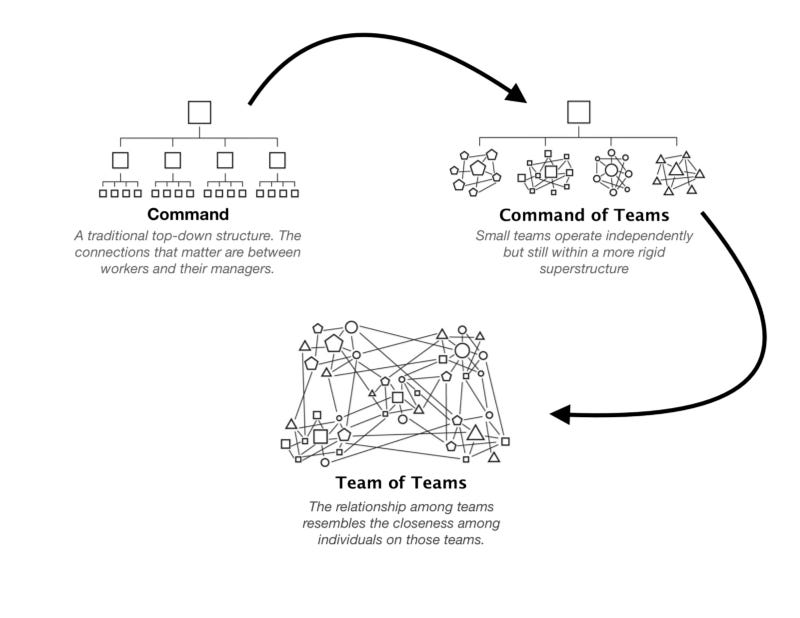
So the move is also the honest one. Stop competing for the frontier. Compete for the floor. Take the strong open models that already exist, American and Chinese alike, adopt them, build on top of them, make small and midsize businesses compete with larger ones, allow for actual change instead of a performative one (did somebody say Aleph Alpha?) until the baseline runs on infrastructure nobody in Washington can switch off.
Sovereignty is the ground that stays under you when the frontier goes dark.